Tuesday, May 26, 2020

Everything you need to know about you’re Herb Garden

So you want to start a Herb garden, but you don't know how? Well I'm here to tell you all about them, as well what herbs are, what kinds of herbs there are and how to care for one. An herb garden, either for culinary practices or just a hobby, is exactly what it sounds like, an indoor or outdoor garden for herbs.

Herbs are a type of plant classification that is mostly used for culinary practices or medicinal practices. The word “herb” refers to a green leafy part of a plant that is used as flavoring in food that's not a main ingredient. With that being said herbs aren't always used in the kitchen. Herbs have always for years been used for medicine and remedies. An herb is usually described as a fragrant aromatic property, for example Lavender, lavender is a light purple  flower on a green stemmed plant. It's mostly used medicinal or for its perfumey floral fragrant smell, but as medicinal you can also use it in cooking or baking. Most common herbs are leafy plants like parsley, basil, oregano, mint, and sage. But we also have herbs such as rosemary, dill, and chives. Herbs are very important to foods we all know of and love, for an example dill is mostly used in the making of pickles. Chicken or turkey for thanksgiving mostly is decorated and crafted with rosemary, sage, chives, and garlic. Or asian food, most common herbs to use is tumeric, ginger, chilies, sesame seeds, anise, clove, soy, and coriander. Or in italian cooking, basil, parsley, peppers, garlic, bay leaves, thyme, and sage, though these aren't limited to types of cooking, just flavors that go well together.
All herbs can be in an outside garden or an inside garden, mostly all herbs just need moderate continuous temperatures usually around 65 to 70s fahrenheit and soil that is well draining, herbs are low maintenance, but always keep high sunlight and soil semi damp.

Wednesday, May 20, 2020

Alyssum Flowers


Sweet Alyssum (Tall White) Seeds - Lobularia maritima


What is an alyssum flower?

An alyssum or Lobularia maritima is a flower that grows and blooms for one growing season. They are indigenous to the Mediterranean region and are known as hardy annuals. Hardy annuals are capable of surviving light frosts or slight drops of temperatures.

Growing requirements :

Growing alyssum are considered low maintenance due to the speed of growth. The flowers require full sunlight and loamy, well-drained soil. Occasional cutting of the parts of the plant that reach out too far, about 1/2 of the growth (according to prefrerence), will promote further flowering.

Characteristics :

- Failry small flowers
- Four(4) petals with squarish shape
- Arranged in rounded clusters
- Fragrant
- 4-6 inches tall, 6-9 inches of spreading
- Narrow leaves
- Colors may include: white, purple, rose, pink, and violet

Sweet Alyssum (Tall White) Seeds - Lobularia maritima | Alyssum ... Flower bed uses :

Alyssum flowers are most used to compliment an arangement of other plants. They may be place in front of taller plants and allow for a border appearance. The flowers also aid as filler plants to prevent gaps in the flower bed. Alyssums are known to attract pollinators such as butterflies and ladybugs.

Sweet Alyssum Facts :

- The name is based off the fragrance of the flower
- Used in aid of folk medicine to cure rabies
- Less likely to die during a rainstrom, as compared to petunias
- Used to decorate cemetary monuments during Memorial Day
- The white alyssum flowers are nicknamed the "Carpet of Snow"

Monday, May 18, 2020

My favorite flower, the Black Dahlia

The Black Dahlia 

The Black Dahlia is one of my favorite flowers, contrary to the murder mystery of the Elizabeth short, the Black Dahlia is scientifically known as Dahlia Pinnata Cav. The flower itself is very popular, and very appreciated. Its flower has multiple parts to it, the petals are almost half cones, with deep red, and burgundy color that appears as a black flower hence the name.
The dahlia is a perennial tuberous plant the flower is normally planted in the spring and they bloom mid summer around june, these can last up to the ends of october. You can even leave the bulbs in the soil through winter and they'll come back each year because of the perennial nature of the plant.  The Dahlia grows from a bulb like most flowers, the stem is tubed, they have very leafy stems, and they can grow as high as 6-8ft. The Dahlia originates from Mexico, columbia, and central america, but it was introduced to spain in 1802 by a botanist, and a swedish botanist by the name of Andreas Dahl gave the name dahlia to this plant. Its original use in Mexico and Columbia was known as  “Cocoxochitl,” meaning cane of water due to its tubed stem like structure. It was used to feed animals on its foliage and stem. 
So the reason i love this flower is the color of it really, the way it shines in light at different angles you can see that sometimes it'll look deep burgundy, deep red, purple or dark blue even, but the best one is when they look just black and crisp. The texture can also affect visually if there's different light it can look smooth, velvet like. The dahlia relates back to history as well, in the victorian times the display of emotions and love was uncommon and seen as a bad thing so this was really the starting period in which people with send others flowers to show them how they felt, the black dahlia was a flower of commitment, eternal bond between lovers, it was also a flower of elegance and royalty.  


Monday, May 11, 2020

Violets

Viola 'Celestial Northern Lights'

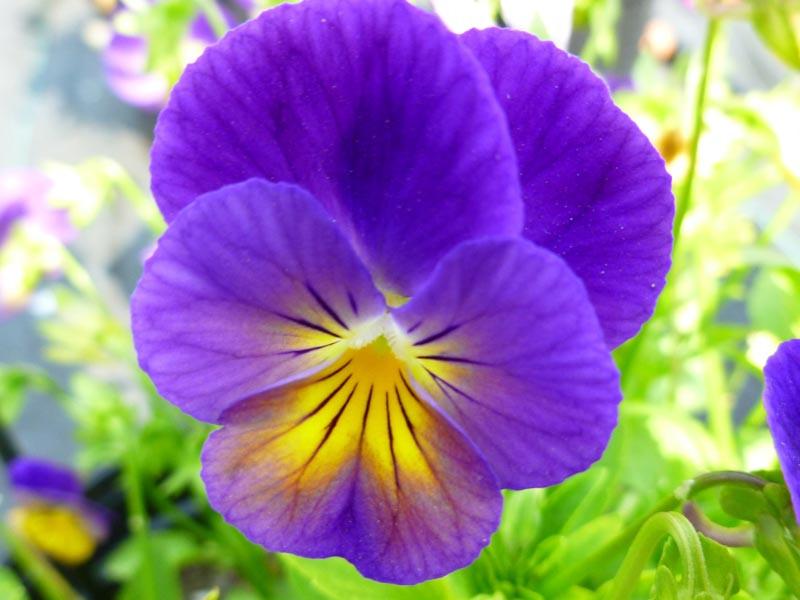
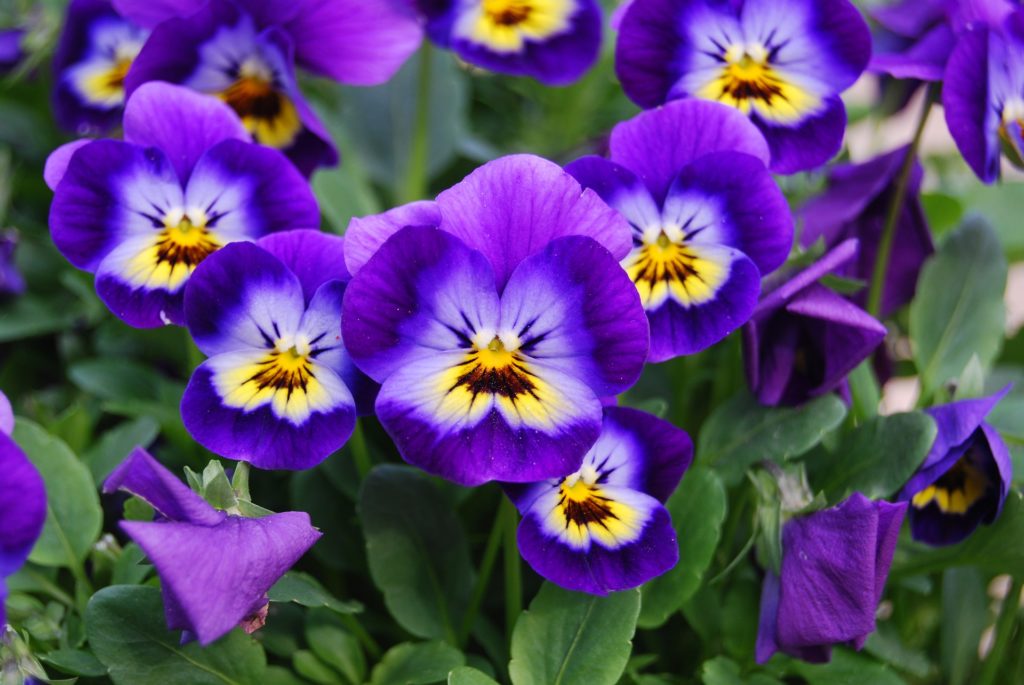
There is a variety of violet types, more specifically known as Viola cornuta, that I adore. One of my favorites is known as 'Celestial Northern Lights'. This type of flower is one of my favorites because of the vibrancy! The colors burst from the center and expand into a depth of violet calmness and wonder.

Colors range between dark blues and purples from yellows to pale purple. As perennials, they return each year with a sweet fragrance. They are short in height yet long lasting in life. They are wonderful plants for butterfly gardens and attract pollinators.

Initially, I was drawn to the name Violet from my favorite book and Netflix series. As years passed, the flower itself had grown onto me. I adore the colors and symbolism behind them. Violet flowers most symbolize everlasting love.


Viola Northern Lights (Violet, Pansy) | Flowers perennials ...

Viola (Violet) | A to Z Flowers

Tuesday, May 5, 2020

Which Potting Soil Should I Purchase?

As you prepare to create your spring flower containers you will most likely need to purchase a bag of potting soil while you are at the garden center. But, have you ever looked at the numerous options of soil available? How do you know which one to purchase? What specific ingredients should a good quality potting soil contain?

Well, first let's learn a horticulture term. A growing medium is the substance in which the growing of a crop is accomplished. A growing medium is important to overall plant success, as it serves to support the plant, provide nutrients and oxygen, and absorb water. These four items (support, nutrients, oxygen, and water) are essential requirements to any plant in any growing condition.

More specifically, when looking for a growing medium for plants in a container you should seek to find a product that says "Potting Soil or Potting Mix". Potting soils should be used for container planting and container planting alone. Potting soil mixtures should not be used as general landscape gardening soil. Furthering, gardening soil, compost, manures, mulches, etc. should not be used for container planting. The reason being, general gardening soil, contains many heavy additives such as clay and sand. These two examples of growing mediums (sand and soil) can suffocate the nutrients from your container plants.

Now that you have narrowed down your selection at the garden center, you should just be looking at bags of planting media that says "Potting Soil or Potting Mix". Remember the potting soil must provide support, nutrients, oxygen, and water to our plant. Most potting soil mixtures consists of three ingredients: peat moss, pine bark, and perlite.

Peat moss is grown and harvested from peat bogs in Canada and the Northern United States. Peat moss provides great moisture retention abilities which allows for the potting soil to retain water and make that water available to the plant.

Pine bark is derived from trees when trees are harvested to make paper. Pine bark and any other bark material provides structure to the growing medium as well as adds another dimension to the growing medium creating more pore space for oxygen and water to travel to the plant roots.

Perlite is naturally derived from volcanic rock. It is mined and then heated to a very high temperature until it expands and becomes like a piece of popcorn. Perlite is white in color and very light. Perlite helps to increase aeration as well as create a light and fluffy medium that is not overly dense.

Potting mixtures should be light and fluffy. Oxygen is essential to plant growth. Oxygen helps to break down food through a processes of respiration to generate growth. Most of a plants respiration occurs in the roots. Pore space provided through a light and fluffy growing media provides plant roots with oxygen for the respiration process. Additionally, when you fill the planting container with potting soil, it should be moist but not saturated. Water must be accessible for the plant roots, but excess water can become too heavy and cause the growing root system to rot.

Lastly, most potting soil mixtures contain three common nutrients for overall plant growth. Nitrogen (N), Phosphate (P), and Potassium (K). Nitrogen is mostly responsible for growth of the leaves of the plant. Phosphate encourages root growth, flower and fruit development. And Potassium helps the plant to complete all of its general plant functions.

In conclusion, when preparing to plant your spring containers, be sure to purchase "Potting Soil or Potting Mix". The potting soil mixture should be light and fluffy and moist. Avoid heavy media such as sand, clay, or compost, etc. Rather, a mixture of peat moss, pine bark, and perlite offers good quality support, nutrients, aeration, and moisture retention to your container plants. Quality potting soil will ensure your beautiful container arrangements is healthy and beautiful for many weeks to come.


Monday, May 4, 2020

Will This Plant Grow At My House

If your asking yourself "will this plant grow at my house?" Well I have the answer for
you, but first we have to look back at the basics which is to find out your hardiness zone in your area. The Hardiness Zone Map shows Horticulturalists, and gardeners which plants or crops with grow and thrive at a specific location, this mostly depends on the regular and consistent temperature and weather. 
As a Gardener or Horticulturalists, when we refer to the term "hardiness" or "hardy" we are simply referring to the likelihood or the plants ability to withstand winter temperatures and come back the following spring. if a plant is hardy, it means if that specific plant has the ability to endure cold temperatures (as average in your area) without harming or killing the plant. This plant being able to endure cold temperatures would able to endure cold temperatures would be considered a perennial plant as it would over winter and then come back again. Compared to a plant that is not hardy in your location it cannot withstand the cold temperatures in your area, and would die if placed in that cold temperature environment. Therefore, these plants would be annuals, only being able to complete one life cycle during the warmer months 
Once you visit the USDA site and enter in your zip code, a zone code will be given to you. This code indicates that based on your location this is the “reference number” for the hardiness of plants in your area. For example Adams County, Pennsylvania is in zone 6b. The key on the USDA hardiness zone map further explains that the lowest temperatures in zone 6b range from -5 to 0 degrees Fahrenheit on average. This information tells me that perennial plants (plants that I want to come back each year) must be able to withstand -5 degree Fahrenheit weather. But how do I know which plants can handle -5 degree Fahrenheit weather? Well, when you look at a plant label such as the one below, you will see that the label has a Zone range indicated on it.
in this example a Knock Out Rose bush is able to be planted in zones 4-10. So our zone 6b is within this zone. Therefore the Knock Out Rose bush is able to withstand the -5 degree temperatures of our area.  When selecting plants, select plants that have a zone range that your zone location falls within. Or select a zone that is the same as or less than your zone. For example, I may also plant a plant that has a tag that says zone 4 hardy, in my zone 6b. To see if your plant will survive and grow at your house you will have to go to the official USDA Plant Hardiness zone Map https://planthardiness.ars.usda.gov/ and from this website you’d have to put in your zip code and it’ll show you your regular temperatures, and from then you can see if your plants can withstand your temperatures.
As I mentioned before Adams county is in the zone 6b but what does that mean? There are two letters that correspond with the number zones which is “A and B.” “A and B” are used to further divide each zone. “A” tells us that the zone it corresponds with is more likely to see the lowest coldest temperature on the zone map spectrum. “B” tells us that the zone B corresponds with is more likely to stay on the higher (warmer) end of the zone spectrum. 

Sunday, May 3, 2020

Creating a Spring Container Arrangement

Begin adding beautiful spring color to your backyard patio, or your front porch today! It's time to start planting beautiful planters. With just a few easy steps, this is a perfect opportunity for you to enjoy all that spring has to offer.

Purchasing A Perfect Plant

Often, when we as consumers go to the grocery store or to the department store, we buy with our eyes. Meaning we purchase what looks appealing. Items that have cute designs or items that include our favorite color or style. This is important as we should buy what is appealing to us. However, we must also be sure that the items we buy are logical in meeting our needs.

The same mindset is true of plants. We often purchase plants because we like the color of the flower or we like the shape of the flower bloom. And, again it is important to select plants that we like, but we also need to consider the overall health of the plant to be sure it will remain beautiful and healthy in our flower garden or flower containers at home. When purchasing a plant for your home garden, consider these three items, plant maturity, plant health, and soil health.

These Gerbera daisies are one of my favorites. 

Plant maturity refers to the stage of life the plant is currently in. Now, don't over think this. I like to think of plants as having three stages of life. A young and naive stage, a middle prime-time stage, and an over the hill, past-it's-peak stage. A young naive plant, is a plant that has young, green, healthy new shoots to it. I would consider this stage of plant life to have very minimal growth at this point. Additionally, I would consider a plant in the young and naive stage to have very few blooms if any blooms at all. Really at this young stage the plant is placing all of it's energy into creating and establishing a healthy root system and increase in vegetative growth.
A plant in the middle, prime-time stage is a plant that is healthy, with nice compact green vegetative growth. It has a sound root system, and one or two blooms opened with a few blooms that have not opened yet. These unopened blooms are the key to knowing the plant is in it's middle stage, as it has this new growth that has not fully opened or emerged yet. This is the optimal stage of life at which you should try to purchase your plants. The sound root system and the open blooms gives you an idea for the current health of the plant while promising so much more beauty as it continues to grow.
The final stage of plant growth is the over the hill, past-it's-peak stage. In this stage the plant has reached it's maximum growth, it is in full bloom and unlikely to grow or bloom much more. These plants might begin to show signs of wilt or of damaged and falling blooms. So, my best advise is to select a middle age plant that has established healthy growth, a few open blooms, with many more unopened blooms yet to fulfill it's beautiful colors.
New blooms are a sure sign of the good yet to come.

Secondly, when purchasing the perfect plant, look at the overall health of the plant. You ideally, want to purchase a plant that is going to make your flower garden or container arrangements, beautiful for many weeks.So you want to make sure the plant is healthy. How do we know if a plant is healthy? Well, the best place to look is the leaves. Most all plants have some sort of green leaf structure to them. The leaves should be a solid green color (unless they are cultivated for a variegated design). If plants have a disease, the leaves are one of the first places to show the symptoms of the disease. Most times the leaves will become discolored or show a yellowing of the leaf. Additionally, the leaves should be strong, crisp, pointed, or upright. This gives us an inside look to the cells found in the leaves. The leaves have storage compartments called vacuoles inside them. The vacuole holds water mostly. If the vacuole is empty (meaning the plant is lacking sufficient water), the leaves will begin to wilt, and fall back towards the stem or droop downward. Lastly, the plant should have nice green vegetative growth to it. The stem should be strong and sturdy, not broken or showing any damage. There should be healthy blooms that are open or beginning to open. If the plant has multiple brown, dead leaves or dead flower blooms to it, it may have a disease or be lacking some healthy nutrient. Select plants that have bright green, strong, crisp, and healthy leaves.

Light to medium brown soil with white perlite granules.
Lastly, as you make your plant purchase, take a close look at the soil the plant is currently living in. The soil can tell a lot about the plant. The soil is the place where plants receive their water and nutrients. So, the soil should be moist when you purchase a plant. Avoid purchasing plants that are bone dry. When soil becomes dry for a long period of time, it will form a hard crusty layer on top. Any water that you apply will mostly run off the soil, because of the crusty layer that has formed. At this point the plant has entered in the wilting stage because there is no water available for the plant to access. Additionally, try to avoid plants that are completely saturated. Most plants prefer to just have a moist soil environment. Many plants do not like "wet feet" or having excess water on their roots. Excess water in the soil invites disease and bacteria to form which will eventually harm the entire plant. When you pick up the plant container, it should not be overly heavy, but it should also not be completely light. The color of the soil should be a light to medium brown, and cool or moist to the touch. Also, when looking at the soil, look to see if there are nutrients (small colorful granules) that have been added. This is helpful to see, to know that your plant has been given additional plant food or nutrients to help promote growth beyond its greenhouse or store lifetime.

As you head to a local greenhouse or garden center to purchase beautiful spring annuals, be mindful of the condition of the plants. Yes, select a plant that is beautiful and has nice colorful blooms. But, as look deeper at the plant. Select a plant that is blooming yet, still contains unopened blooms, healthy, strong, green leaves, and moist light to dark brown soil. Happy Spring!


What Types of Plants Should I Plant?


Great question! The first thing you may wish to consider is your location. Do you live in a fairly warm place or is it snowing every other day? Plants are dependent on water, nutrients, sunlight, temperature, space, time, and air quality. There are 4 types of plants: Annuals, Perennials, Deciduous shurbs/trees, and Evergreen shrubs/trees.

Plant material is broken down into 4 category types based on stem texture, life cycle, and leaf retention. Steams are classified as being herbaceous or woody. An herbaceous stem is soft green stem that is often found on flowering plants. Whereas a woody stem has a hard, rough, "woody" texture that is often found on trees and shrubs. Therefore, our flowering herbaceous stem plants are cetegorized as either annual or perennial plants. Woody stem trees and shrubs are categorized as either deciduous or evergreen trees or shrubs.

Which Types of Plants Are Best?


     Preferred plant types are ultimately up for you to decide! Each is unique and follows their own requirements. Annuals and perennials are known to be flowering, therefore, making them decorative and a wonderful gift for friends or loved ones. Deciduous trees or shrubs earn their claim to fame from their fall colors and multipurpose uses such as homes for small critters. Evergreen trees or shrubs are used decoratively for holiday celebrations and barriers around property lines.

     Annuals :

     An annual is a plant that grows for 1 year/growing season. They do not return for the following year. As a flowering plant, they can be colorful and vibrant. If you enjoy working in the garden or flower bed each spring, annuals would be a great option. Pricing out seeds or plants are fairly afforadable and the varieties are bountiful.

     Examples! - Snapdragons, Petunias, Marigolds, Dahlias, Periwinkles


Petunias


Marigolds

Perennials :

     A perennial is a plant that grows, flowers, dies, and returns all during 1 growing season. They grow and flower for up to 2-10 years. Their stems are herbaceous and soft. Their blooms are upright and taller than annuals (as shown below with the tiger lily plant). Although their leaves die, the roots continue to keep alive. During the down part of the season, which usually persists in part of fall and all of winter, they go "to sleep" to conserve energy. They require deadheading. Deadheading is the action of cutting the dead, brown, flowering part of the plant off. Similarly to annuals, they are bountiful in variety and aesthetically appealing.

     Examples! - Black-Eyed Susans, Daylillies, Tiger Lillies, Shasta Daisy, Phlox


Tiger Lily


Shasta Daisies

     Deciduous :
   
     If you would like to add trees or shrubs to your flower beds, one item to consider is their leaf retention. Do you want the item to remain green all year or do you want the item to flower into a beautiful color? Trees and shrubs that do not retain their green leaf color all year long are deciduous trees. At some point during the growing season the tree or shrub will flower. After flowering, the tree will put on green leaves. By the fall/winter time the tree or shrub will drop those leaves and become "naked" for the winter. The leaves of a deciduous tree or shrub are much larger, flat, and broader than the leaves/needles of an evergreen. During some point of the growing season they will flash their colors of orange, reds, and yellows proudly.

     Examples of deciduous shrubs! - Butterfly Bush, Hydrangea, Burning Bush, Forsythia, Lilac


Forsythias

     Examples of deciduous trees! - Maples, Flowering Cherry, Dogwood, Magnolia, Oaks


Flowering Cherry

     Evergreens :

     Trees and shrubs that retain their green color all year are evergreens. These trees and shrubs oftenhave narrow leaves or needles to them, which will remain green all year. They aid in creating privacy barriers and require low maintenance. Needles may periodically shed due to weather changes. Many evergreens are drought tolerant and can withstand dry periods of time.

     Examples of evergreen shrubs! (mature height is less than 15 feet and has multiple stems at its base) - Littleleaf Boxwood, Yew, Juniper, Holly, Rosemary


Littleleaf Boxwood

     Examples of evergreen trees! (each has one trunk from the base and extends beyond 15 feet tall) - Spruces, Pines, Leyland Cypress, Hemlock, Firs


Hemlocks